

A study in craft, discipline, and restraint — and a quiet through-line in the studio’s work.
Equestrian life has never felt like a pastime to me. It has always been a way of thinking – one shaped by discipline, repetition, and a long appreciation for materials meant to endure.
I was seven when I started riding, in Fontainebleau, where we kept a home in the countryside outside Paris. Some of my earliest memories are tied to those stables and tack rooms: mornings that begin before the day does, routines that rarely change, an attention to detail that becomes instinctive over time.
What stayed with me most was the craftsmanship. The way a saddle is built – the precision of the stitching, the weight and finish of the hardware. Everything serves a purpose, yet carries an inherent refinement.
I don’t think I was conscious of it then, but that sensitivity to material and detail carried into how I design: leather that softens with age, stitching that is exact, hardware that is simple and intentional.
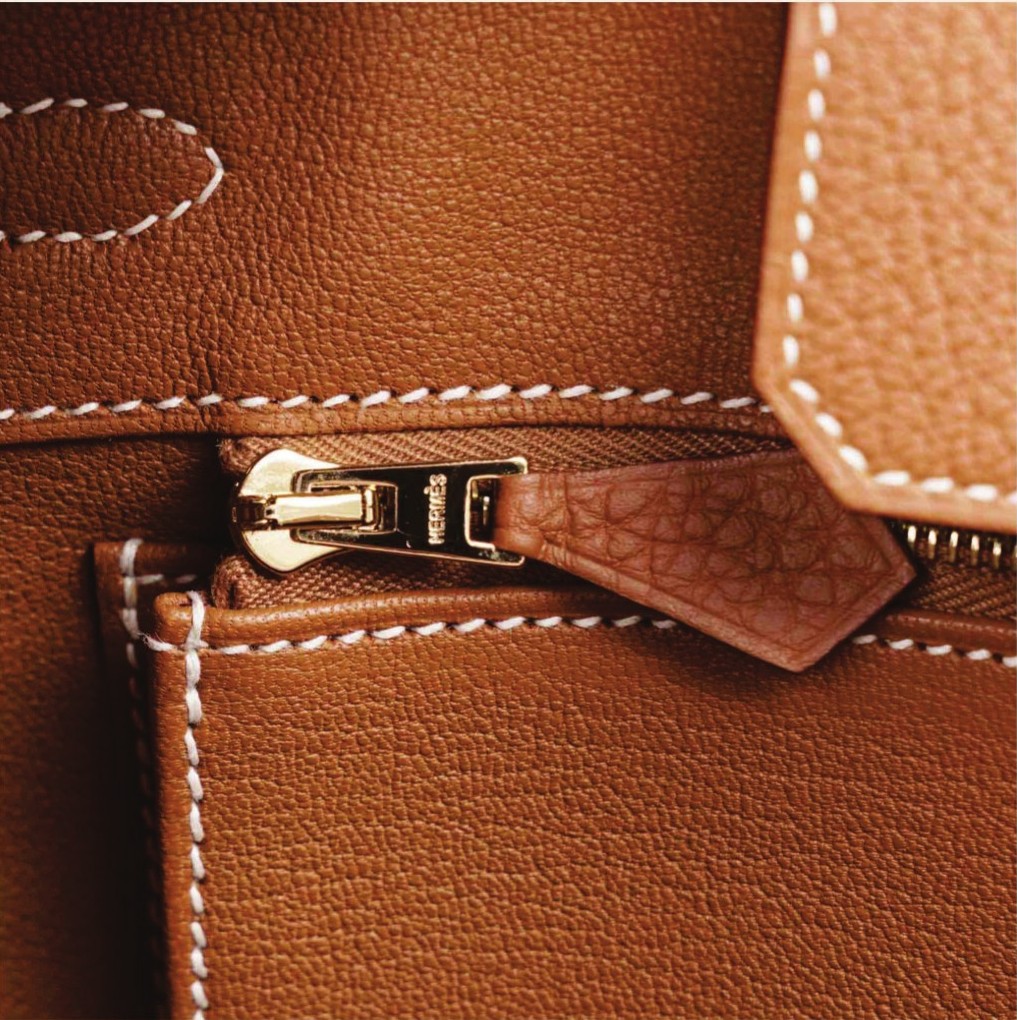
A horse reads your energy before you do. You learn to be calm, focused, connected — that discipline is not a metaphor I reach for. It is simply how I have learned to work.— Laetitia Laurent
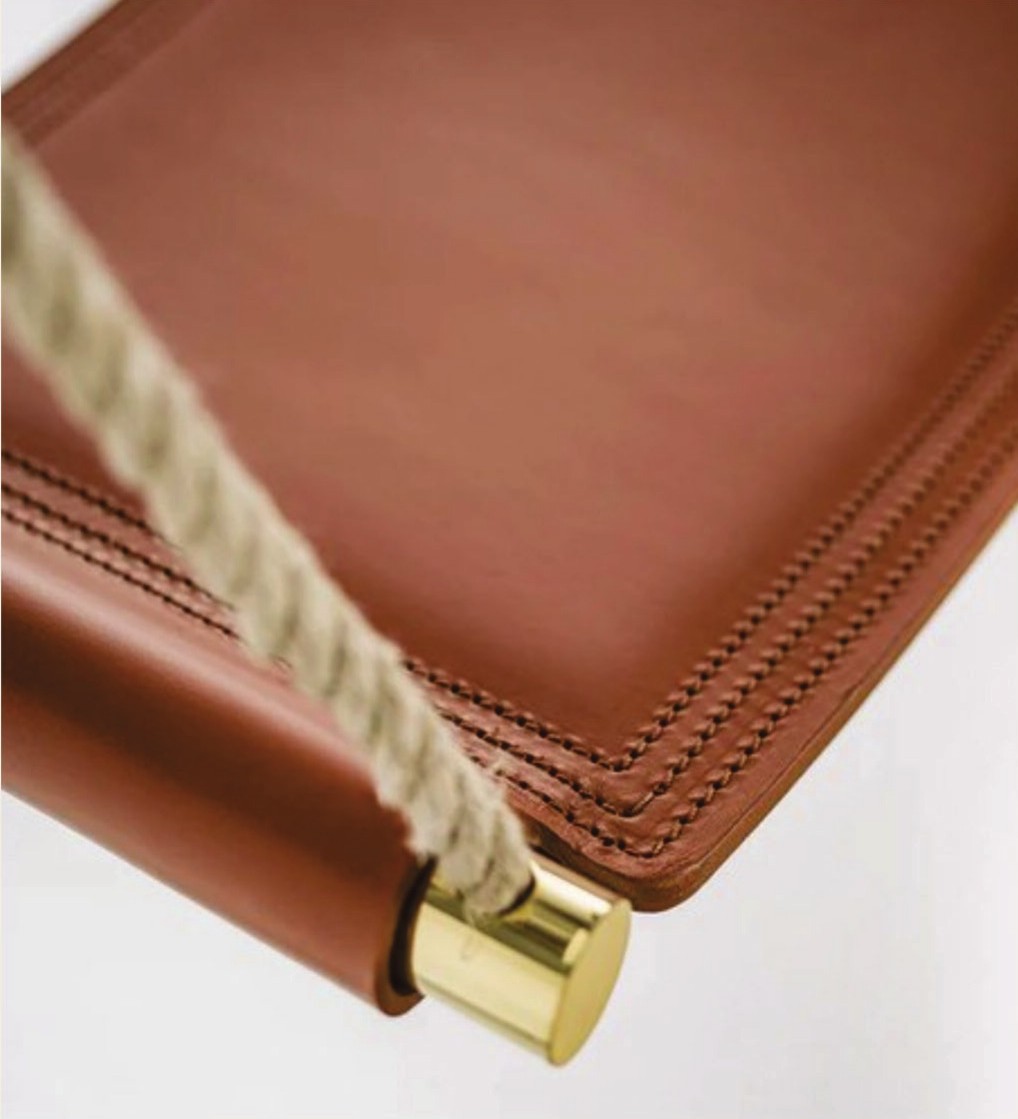
The swing, in conversation with a saddle.
At the Kips Bay Decorator Show House, that instinct surfaced in the swing — leather detailing and precise stitching at the center of the piece. Reminiscent of a Hermès saddle.
It was never meant to read as overtly equestrian, but the connection to saddle-making is there: the balance of utility and refinement, the discipline of the smallest elements. It sat naturally alongside the French heritage references in the room, where material and construction cannot be separated.
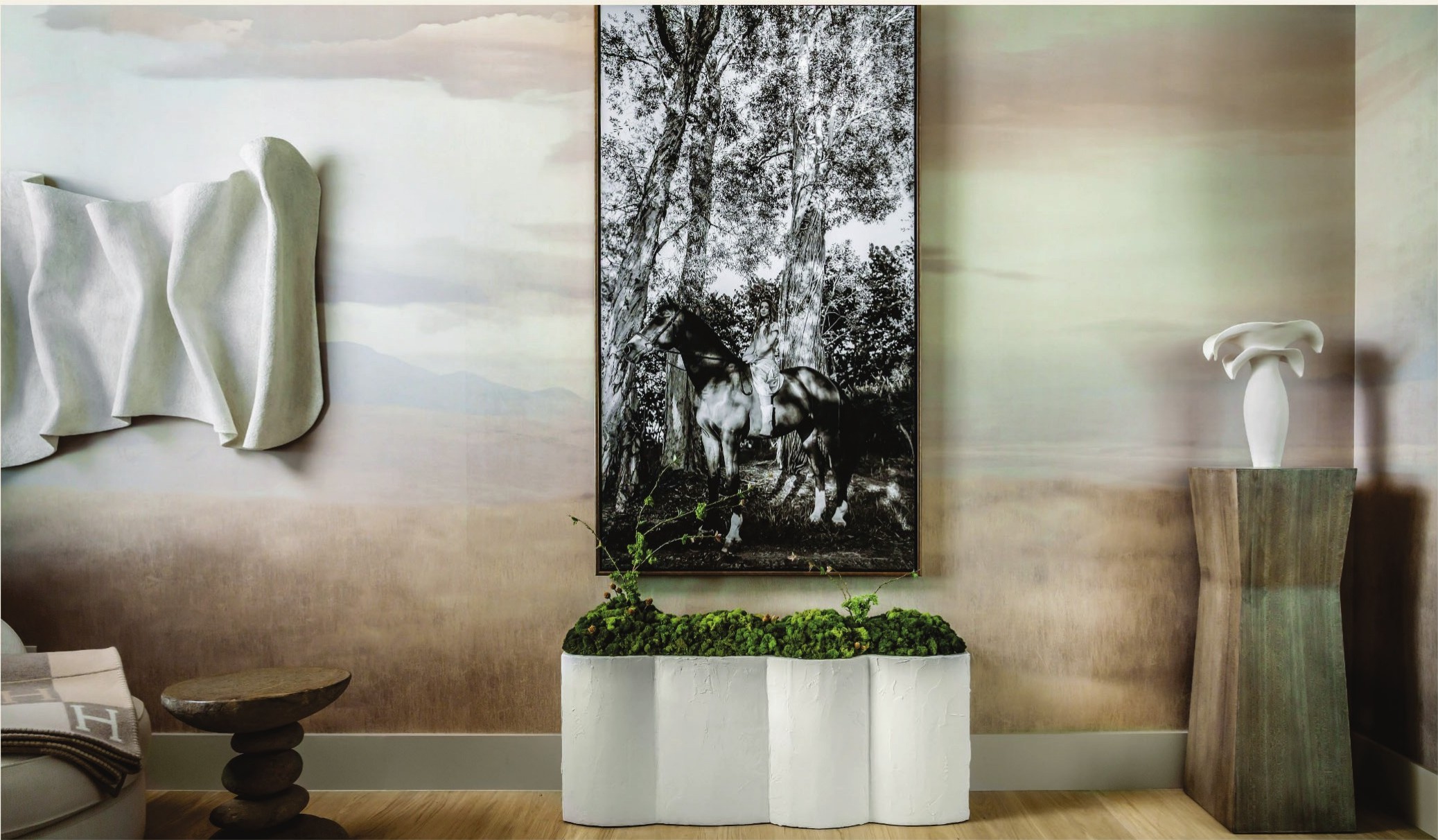
Holiday House Wellington · 2026
Le Repos de la Cavalière
The Rider’s Repose.
Riding has stayed with me because of what it asks. It remains one of the few places where I am entirely present — jumping in particular leaves no room to be passive, and a horse reads your energy before you do.
More recently, at Holiday House in Wellington, the influence became personal: the room was conceived as a retreat, a space imagined for an accomplished rider at the end of the day. Less reference, more atmosphere – a tonal palette, softened textures, a calm shaped by structure.
Where heritage finds its way home.
The same instinct guides the work that comes after the show houses. In a private bedroom, a tan leather nightstand sits within a quiet room of patterned wallcovering and warm wood tones – a small, deliberate piece of saddle-room logic placed inside a room meant for rest.
Pattern is allowed, but it answers to scale. Ornament earns its place by service to the room. This is what continuity looks like, project to project: a quiet preference for materials that will outlast the season they were chosen in.
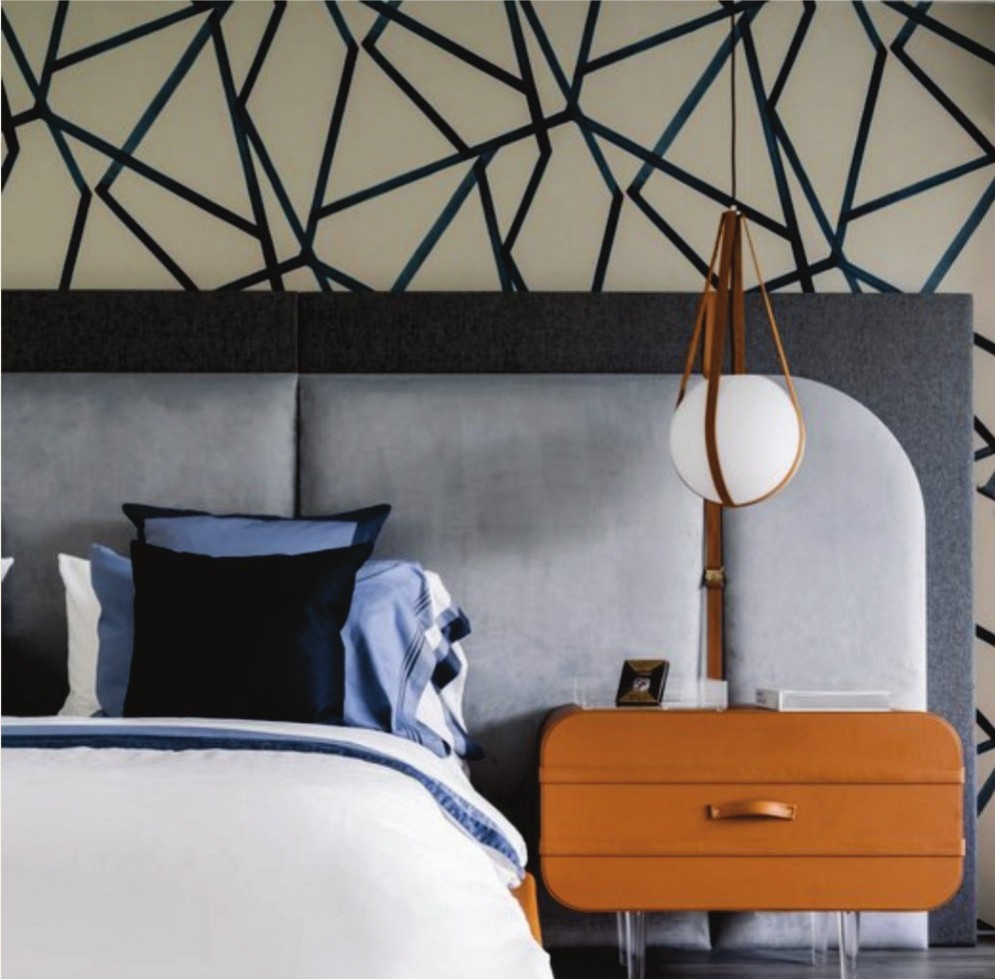
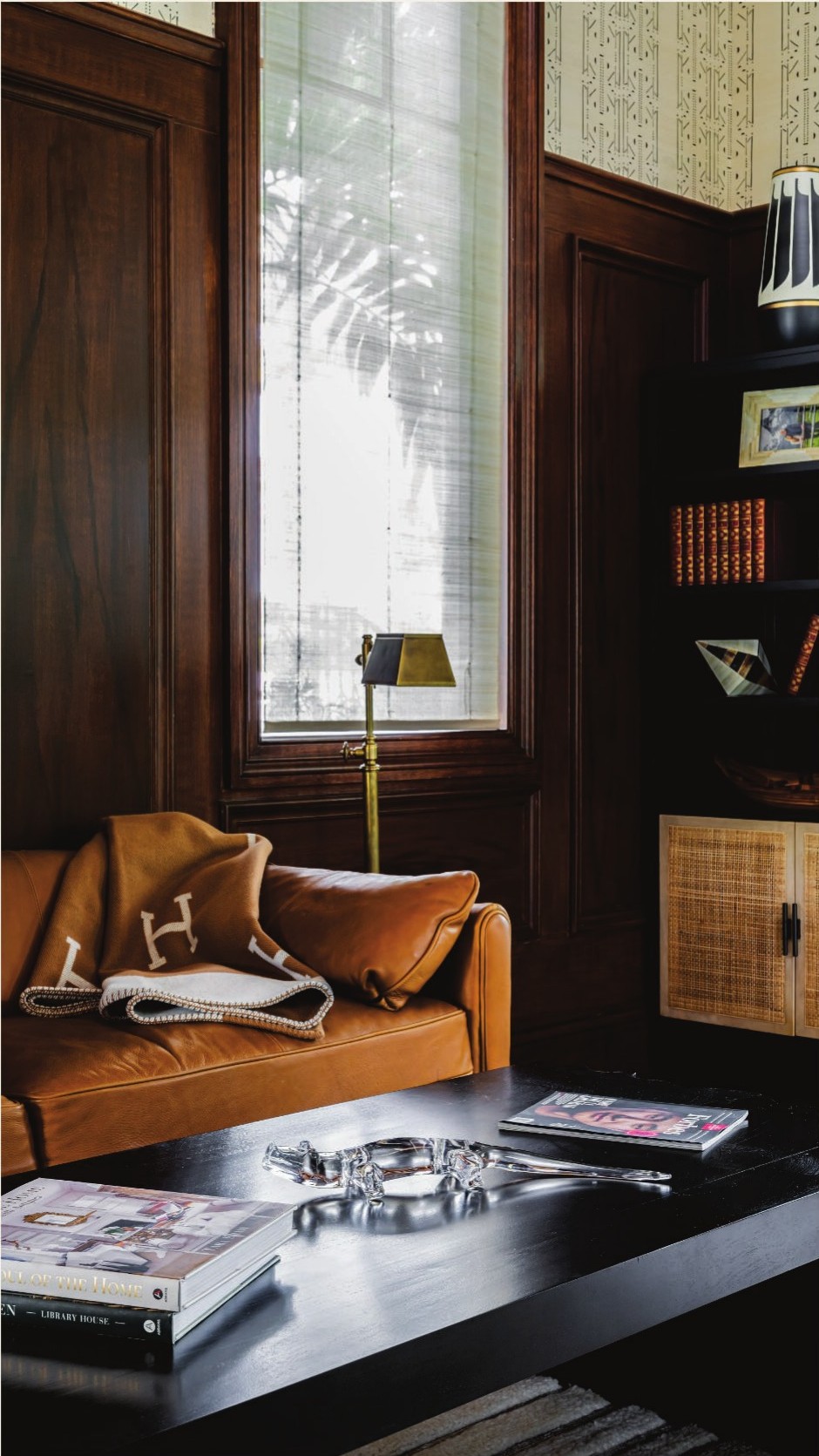
What I have come to understand is that the equestrian influence in my work is not motif – it is mindset. Discipline. A respect for craftsmanship that is precise and understated. Materials chosen because they improve with time. And restraint: knowing when something is finished, and letting it remain that way.
The rituals are still my favorite part. Tacking up. And afterward – washing everything down, greasing the bridle and the saddle, drawing the leather straps through by hand. There is a rhythm to it I now share with my children, and especially with my daughter.