
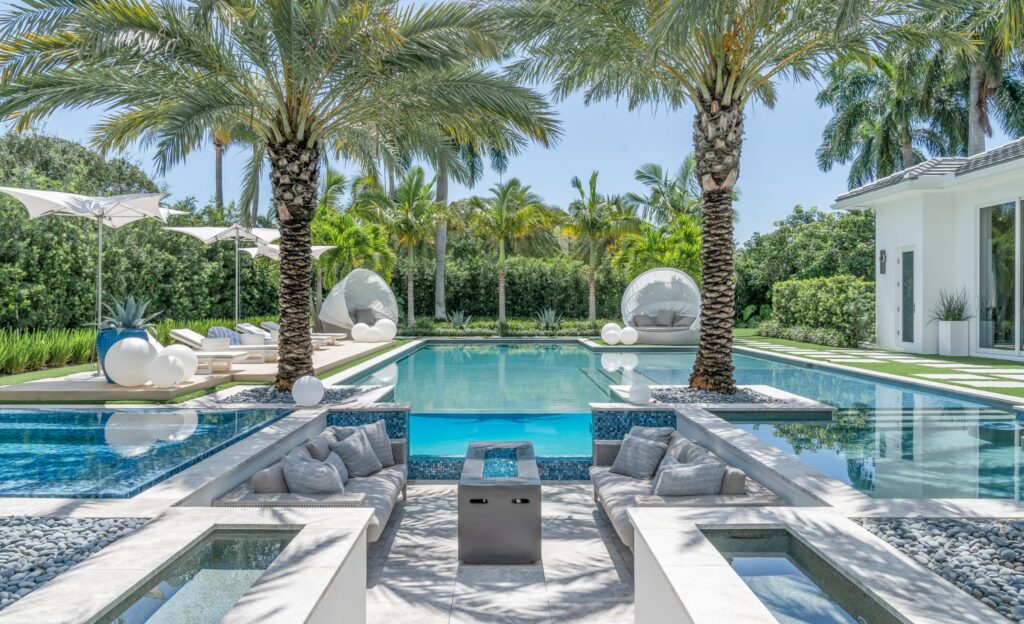
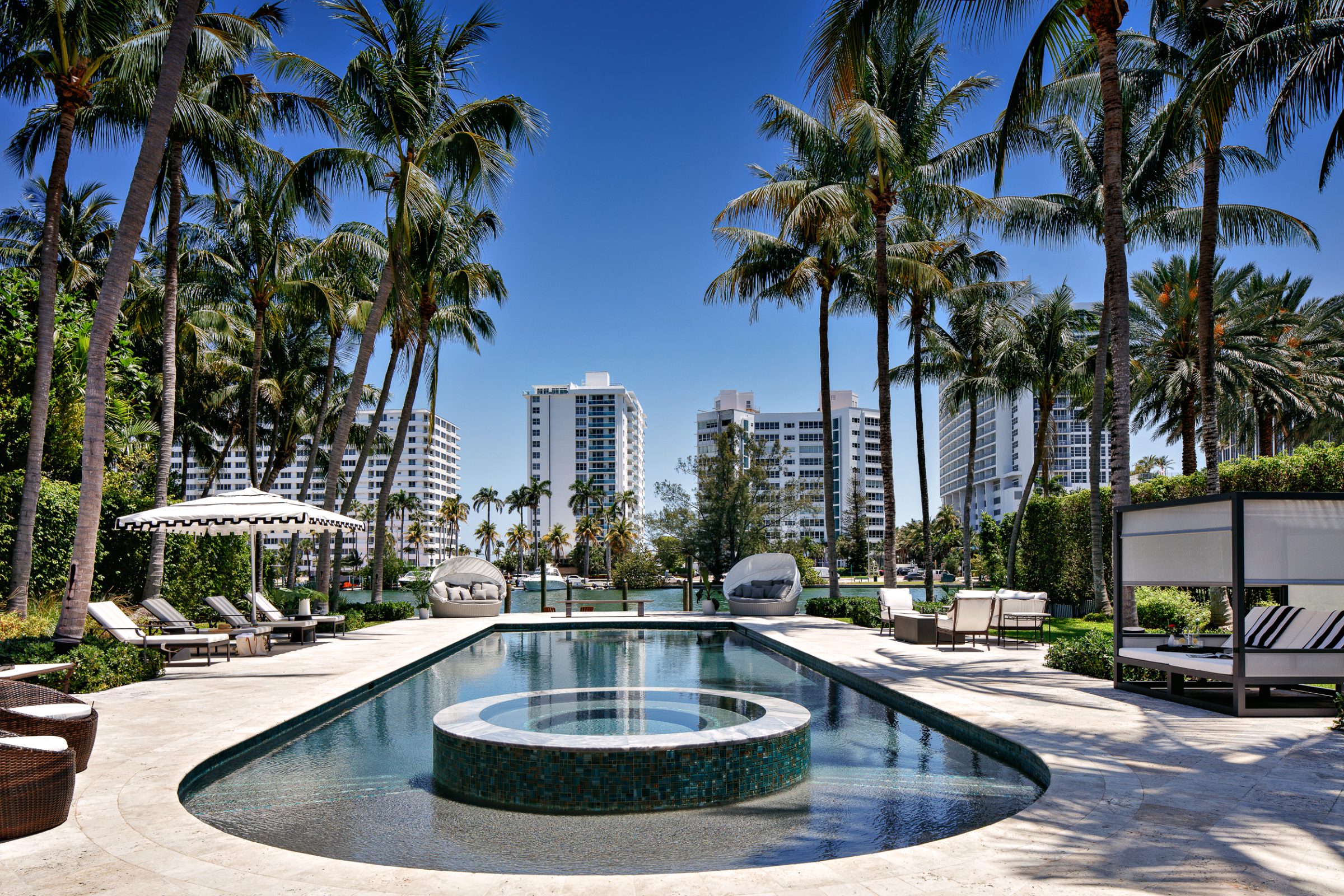
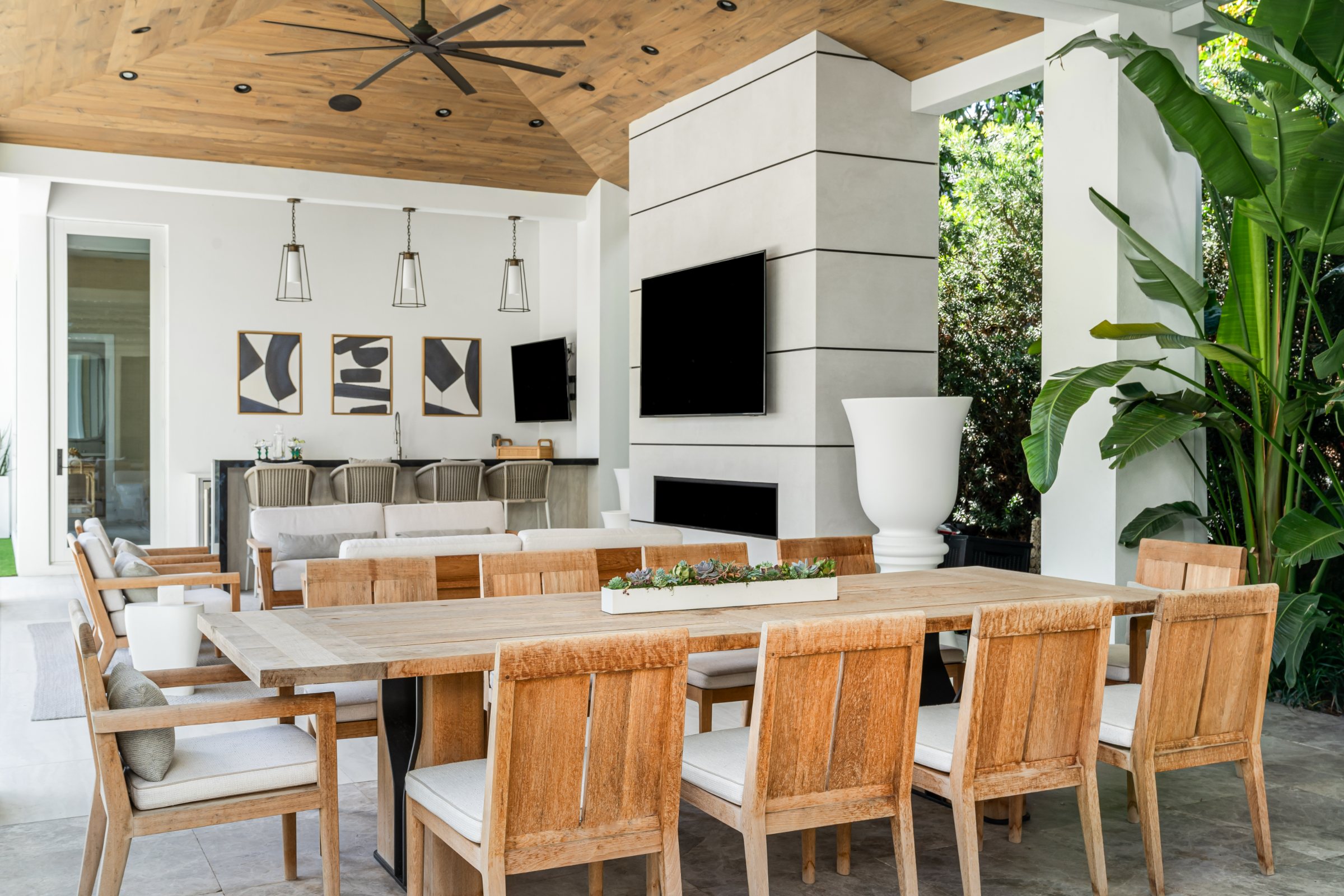
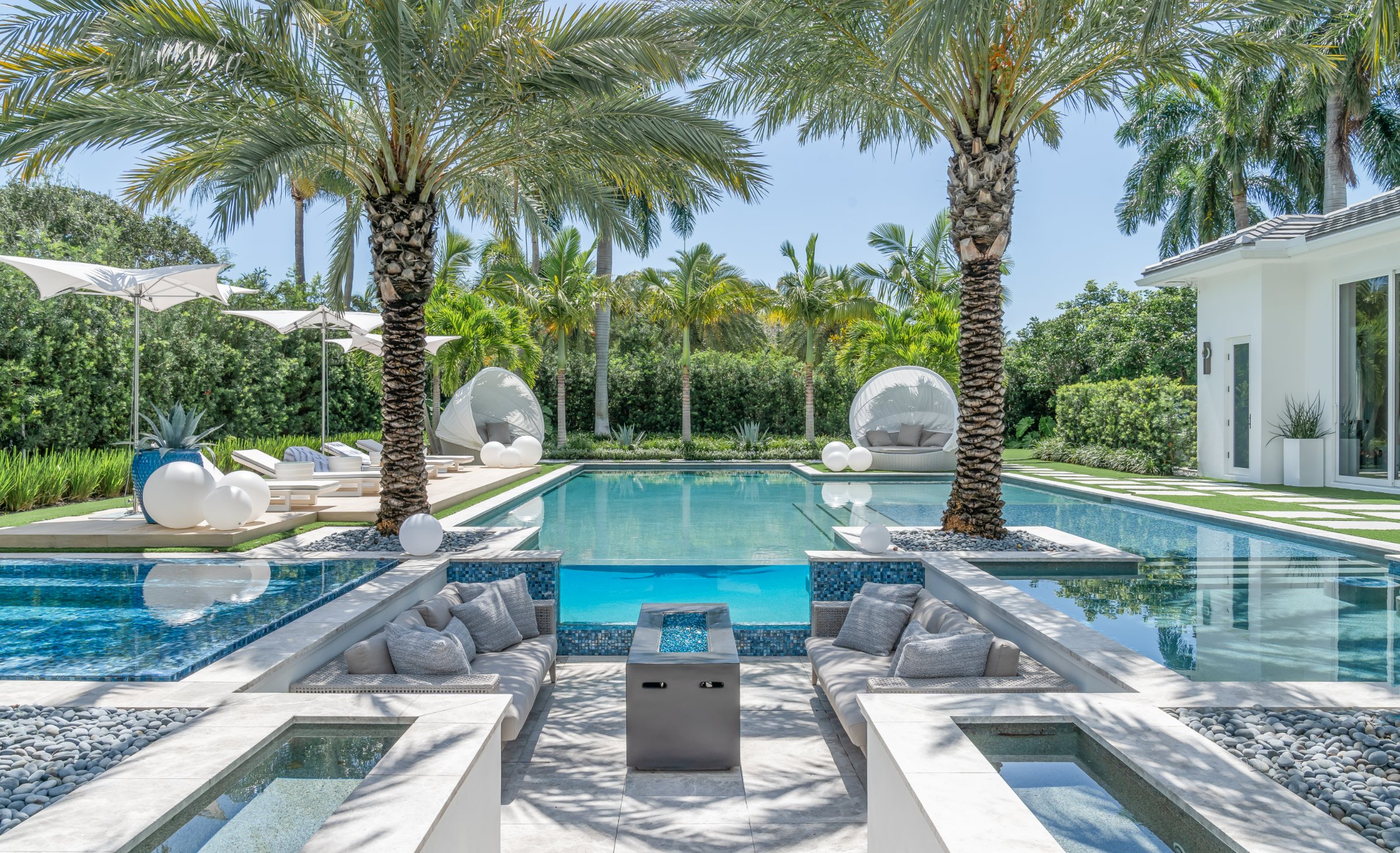
On rooms that live outdoors, and the materials that earn their place in them. I am writing this from Deauville, a treasured summer retreat for my family, and a town arranged from the beginning around the premise that one lives outdoors. Nothing about the Normandy coast makes that easy. The wind comes off the Channel, the salt comes with it, and the rain is not a rumor. And yet lunch is served on the terrace. Friends stay outside long into the evening. Along the planches, the parasols and the cabins have stood since the last century, in colors no one has ever thought to apologize for. No one there considers any of it to be outside. It is simply where one is in summer. That assumption came with me. Southeast Florida is not gentle either. It only looks that way. The sun is direct here and it does not relent. Salt comes in on the wind off the water. Humidity finds its way into everything, and the afternoon rain does its own quiet work. None of which is a complaint — the climate is the entire reason we are outdoors in the first place, and the terrace is where the year is actually spent. But the conditions that make the room possible are the same ones at work on everything placed inside it. The climate gives you the room, and then it goes to work on what you put in it. So I treat an outdoor space as a room. It is furnished with the same intention as any room within the walls, composed with the same regard for proportion, and held to the same standard. What changes is not the standard. What changes is what a material must be capable of in order to meet it. At a Miami Revival home on the water, the terrace had to hold its own against an extraordinary view: an Olympic-sized pool, a verdant expanse of stone, the Intracoastal just beyond. A space of that generosity is not furnished. It is planned. For larger pool patios, I create sub-areas for conversation and interaction, which also breaks up the monotony of the space. A pergola gives the dining table a ceiling. Cabanas and shaded seating establish another room entirely. Hedges and palms draw the boundaries. The structure was always there to be found; the work is in reading it correctly and letting it define the rooms rather than imposing furniture across an open field. Where there is a loggia, the ceiling exists already, and I specify curtains along its open side. They are the part I am most attached to. A curtain is a wall that can be drawn against the afternoon and opened again to the garden in the evening, which is rather more than most walls are asked to do. It is also the clearest answer I know to the assumption that an outdoor room is a room without walls. It is not. Its walls are made of other things: linen, hedge, palm, the horizon itself. Outdoor furniture is one of the few purchases I ask clients to think about in decades rather than seasons. Choose pieces that feel classic and neutral in color and they will not date long before they wear out, which is the first thing I would say about any room, in any part of the house. The second thing belongs to this room specifically. I look for light-toned, powder-coated aluminum, and I ask whether it is marine grade. Marine grade means the piece was engineered for a boat, where salt and sun are constant and nothing is spared. If it is built to endure the yacht life, it will adorn your patio in mint condition. Tone is a practical matter as much as an aesthetic one. Dark metal in full sun becomes something no one will sit on by the middle of the afternoon, and a chair no one sits in has failed, regardless of how well it photographs. When it comes to outdoor, there aren’t that many workarounds, because it has to do so much with the composition. With interior furniture, you may be able to get away with it, but outside, it’s not as forgiving. — Laetitia Laurent
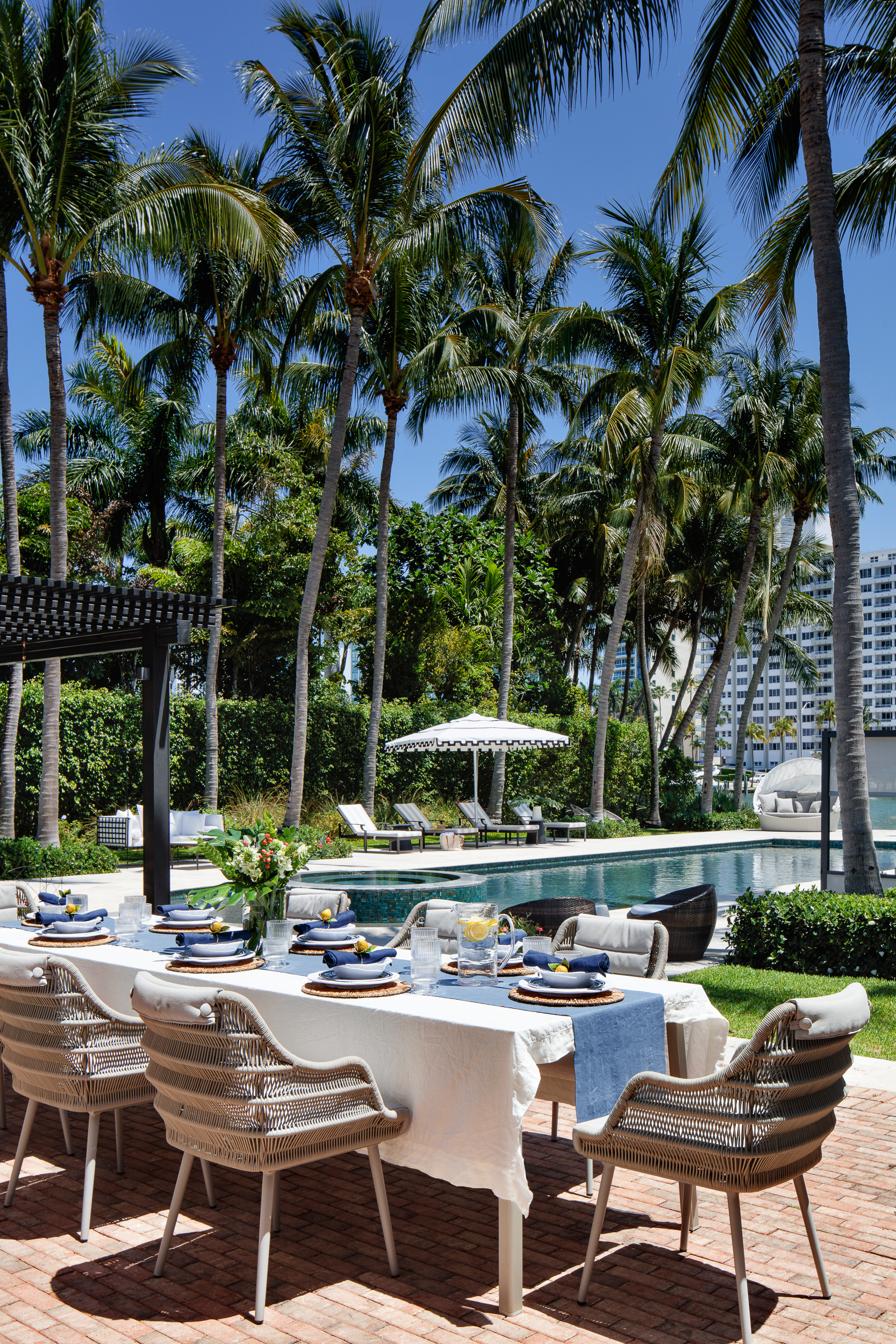
Regardless of the color palette, fabric is the decision I would consider most carefully, because fabric is what decides whether a terrace reads as a room or as a pool deck. I focus on performance textiles. They have advanced so far that I use stain- and fade-resistant fabrics indoors as well, where nothing obliges me to. What they permit outdoors is the thing I care about most: real cushions, generous upholstered seating, an interior sensibility that has not been diluted on its way through the door. For clients who want that fuller, upholstered look rather than a sleeker sling, this is what makes it possible. If that is the preference, I advise investing in furniture covers as well. They add maintenance. They are also what ensure the upholstered pieces endure. Teak asks something similar, and I want to be direct about it: keeping the original hue requires yearly oiling. Otherwise you are waiting for it to weather uniformly over time, which is a true test of patience. I love anything that is natural, but by definition it is not going to look perfect. Nature has irregularities, which make it beautiful. Wood silvers. Stone darkens where the water falls. Plants grow into a shape no drawing anticipated. None of that is a failure of the material — it is what adds charm and warmth to the space. Deterioration and age are not the same thing. A poor material fails, visibly, all at once. A considered material changes, in a direction you can live with. A terrace chosen well is more beautiful in its fifth year than on the day it was installed. It is the same preference that guides everything we do inside: materials chosen because they improve with time. Outdoors, they are simply given more to work with. My French heritage has given me a lasting appreciation for stripes. In this home, the cushions and towel accents are striped, and the Janus et Cie umbrellas are trimmed in black and white. On other projects I allow more color: a Capri-inspired yellow, a chic navy, a vibrant red. They belong to the awning before they belong to the cushion. They were practical answers first — they read at a distance, and they forgive the fading that a flat field of color will not. That is why they have lasted, and why they sit as easily on a terrace here as they do on the French coast. Two considerations will do more for a terrace than anything preceding them. The first is storage. Have an outdoor shed or storage bin, so cushions, umbrellas, and everything else are easily accessible when you need them and shielded from the elements when you do not. This is the difference between furnishings that last a decade and furnishings that last three seasons. The second is the ground. For a pool deck, consider anti-slip and heat-reflective materials, such as light-colored natural stone; travertine and Florida coral both perform this way. It is a matter of safety as much as of appearance, and it is nearly invisible in a photograph, which is precisely why it is so often overlooked. An outdoor room should never feel like an afterthought. It should feel as considered as any room inside, while answering conditions no room inside will ever face. That begins with choosing materials honestly, understanding how they will weather, and accepting that the natural ones will change — and that the change is often what makes them beautiful. Get it right and the sun, the salt, and the seasons stop being adversaries. They become the reason the room looks the way it does. A terrace tells you what it is made of. Not at once, and not in the first year. But it tells you. — Laetitia Laurent
First, the architecture.
A wall that can be drawn.
Pieces chosen for a longer horizon.
The interior sensibility, uncompromised.
What is natural will not be perfect.
The stripe.
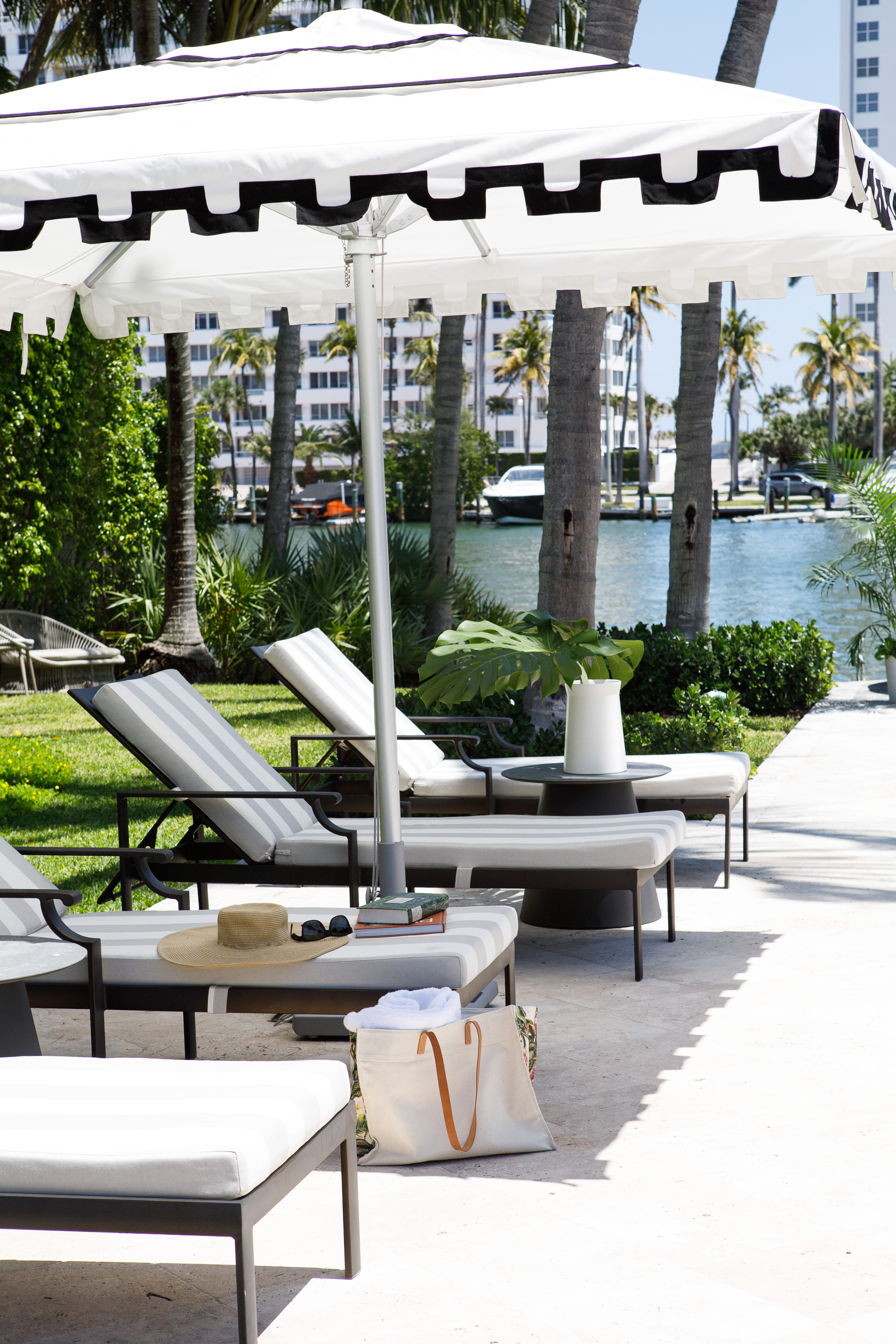
The decisions no one photographs.

— I —
Miami Beach · A Waterfront Residence
The Loggia
— II —
“
— III —
Boca Raton · A Private Residence
— IV —
— V —
Miami Beach · A Waterfront Residence
— VI —
— VII —
“
Founder & Principal, Laure Nell Interiors
Laetitia Laurent’s outdoor design guidance was featured in the July/August 2026 issue of Boca magazine.